Recently in Other Employment Law Rights Category

June 26, 2012

Employees Forced to Resign May Be Eligible For Unemployment Benefits

In Lord v. Board of Review, New Jersey's Appellate Division recently held that an employee who resigned because his employer told him he "had to resign" was not disqualified from receiving unemployment benefits. Specifically, Talmage Lord had a job with Crossmark that involved driving to various retail stores in New Jersey and Pennsylvania to arrange merchandize on shelves. When Mr. Lord notified his manager that he was unsure he would be able to report to work on Monday because his car had broken down, his manager told him he had to "resign effective immediately." Mr. Lord had no intention of quitting his job, and had already taken efforts to find another way to travel for work.

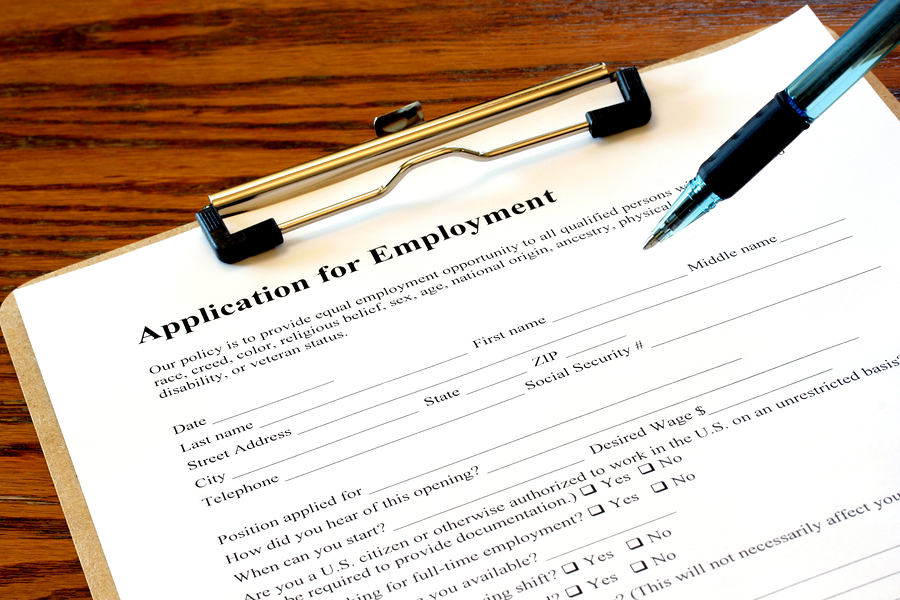
Woman Looking For A Job.jpgWhen Mr. Lord applied for unemployment compensation benefits from the state of New Jersey, his claim was denied on the ground that he left his employment "voluntarily without good cause attributable to the work." That determination was affirmed by the Appeal Tribunal, which reasoned that Mr. Lord resigned voluntarily because he was the one who initiated the action "which eventually lead[] to the separation." The Board of Review also affirmed the decision denying unemployment benefits to Mr. Lord. In effect, the New Jersey Department of Labor adopted a rule that employees who are told to resign are ineligible for unemployment benefits, even when an employee who was fired under the same circumstance would have been eligible.

Mr. Lord appealed that decision once again, to the Appellate Division of the New Jersey Superior Court. The Appellate Division is the highest level of appeal for unemployment benefits disputes. The Appellate Division reversed the decision of the Board of Review and awarded the unemployment compensation benefits to Mr. Lord. The court explained that even though Mr. Lord's manager characterized his termination as a "resignation," it was not any different from termination from employment. In other words, the court made it clear that employers may not prevent employees they wish to fire from collecting unemployment benefits by forcing them to resign.

Continue reading "Employees Forced to Resign May Be Eligible For Unemployment Benefits" »

January 30, 2012

New Jersey Passes Trade Secrets Act

New Jersey law prohibits employees from disclosing or using certain confidential information that belong to their employers. Since many companies are sensitive about having their trade secrets used by their competitors, they frequently require employees to sign confidentiality and trade secret agreements prohibiting employees from using or disclosing their confidential information. Employees should be aware that earlier this month employers gained additional protection for their trade secrets when Governor Christopher Christie signed the New Jersey Trade Secrets Act into law.

What Does The New Jersey Trade Secrets Act Prohibit?

The New Jersey Trade Secrets Act prohibits individuals from misappropriating someone else's trade secret. It defines "misappropriation" as (1) obtaining someone else's trade secret from someone who you know or have reason to know obtained it improper means; or (2) disclosing or using someone else's trade secret without their consent if you: (a) used improper means to learn it; or (b) knew or had reason to know it was obtained by improper means when you disclosed or used it; or (c) knew or had reason to know it was obtained by improper means before you materially change your position based on it. It defines a "trade secret" as information in any form that has actual or potential economic value because it is not generally known or knowable by others through a proper means, but only if the owner of the information uses reasonable efforts to keep it secret.

What Damages Are Available Under the New Jersey Trade Secrets Act?

Businessman Trade Secret.jpgThe New Jersey Trade Secrets Act allows someone who had its trade secrets misappropriated to recover any actual damages it suffered, plus any money the person misappropriating the trade secret unjustly earned as a result. Alternatively, a company can recover the amount of a reasonable royalty from the person who misappropriated its trade secret. In addition, the Act permits a court to issue an injunction preventing an actual or threatened misappropriation of a trade secret. It also allows a court to award punitive damages if the misappropriation was willful and malicious. However, the punitive damages cannot be more than twice the actual damages award. Moreover, under limited circumstances a court also has the right to require the losing party to pay the winning party's reasonable attorneys' fees and costs.

How Quickly Does Someone Have to Bring a Claim Under the New Jersey Trade Secrets Act?

For most situations, the New Jersey Trade Secrets Act has a three year statute of limitations. That means an employer cannot bring a claim under the Act if it waited more than three years after it either knew about the misappropriation, or would have known about it if it had exercised reasonable diligence. However, the Act indicates that a continuing misappropriation constitutes a single claim, which means that the three year statute of limitations does not begin to run until the misappropriation stops. Perhaps more importantly, even if the New Jersey Trades Secrets Act does not apply, other legal obligations, including any provisions in your employment contract, still might apply.

When Does the New Jersey Trade Secrets Act Go Into Effect?

The New Jersey Trade Secrets Act is a version of the Uniform Trade Secrets Act. It has been adopted by most states, but has not been adopted in New York. The New Jersey version went into effect immediately, but does not apply to misappropriations that occurred before January 9, 2012, including ongoing misappropriations that began prior to January 9.

What Can I Do if My Employer Claims I Misappropriated a Trade Secret?

It can be a very serious matter if your current or former employer claims you misappropriated one of its trade secrets. Contact an experienced employment law attorney who can help defend your legal rights.

January 12, 2011

New Rights For New York Hotel and Restaurant Employees

Starting on January 1, 2011, New York employees in the Hotel and Restaurant Industries have new rights and legal protections under New York's Hospitality Wage Order. While there are numerous changes to the law, the following describes some of the more noteworthy changes.

Changes to Minimum Wage
The new law makes it clear that tipped employees must receive at least $7.25 per hour between salary and tips, and reduces the maximum tip credit for food service workers from $2.60 per hour to $2.25 per hour. It also sets new minimum base wages (before tips) for service employees and chambermaids in resort hotels.

Employees Must Be Paid By the Hour
Under the Wage Order, employers in the Hotel and Restaurant Industries now are required to pay non-exempt employees by the hour, rather than based on salaries, weekly rates, day rates, or piece rates. This requirement does not apply to commissioned salespeople.

Stricter Regulations of Tips
Employers and employees in the Hotel and Restaurant Industries are allowed to share and pool tips, meaning combine all of the tips received before redistributing them to employees. However, employers must give employees advance written notice of their tip sharing and tip pooling policies. Employers who use tip pooling or sharing also must keep records of all of the tips they receive, and all of the tips they distribute to their employees. In addition, employers also must treat any special fee for a banquet, special function or package deal as a tip unless they clearly inform customers that the fee is not a gratuity and will not be distributed to employees.

New Requirements For Employee Meal Breaks
When an employee in the Hotel and Restaurant Industries has a work shift that is long enough that he or she is legally entitled to a meal break, the employer must either allow employees to bring their own food, or offer employees a meal at a cost of no more than $2.50, which is the legally required meal credit. Under a separate law, New York State Labor Law Section 162, most employees in New York who work more than a six hour shift that starts before 11 am and ends after 2 pm are entitled to take at least a half hour lunch period between 11 am and 2 pm.

Effective Date
Although the law went into effect on January 1, 2011, employers have until February 28 to make changes to their payroll and bookkeeping systems. However, by the first regular payday after March 1, 2011 employers must pay employees based on the new rules retroactively to January 1, 2011.

Continue reading "New Rights For New York Hotel and Restaurant Employees" »

September 10, 2010

New Financial Incentives and Legal Protections for Whistleblowers

On July 21, 2010, President Obama signed into law the Dodd-Frank Wall Street Reform and Consumer Protection Act of 2010. Among its numerous provisions, the new law contains important economic incentives and legal protections for certain financial whistleblowers. As a result, it creates new employment law rights for employees in both New York and New Jersey.

New Economic Incentives for Whistleblowers
With some limited exceptions, if a whistleblower brings new information about a violation of the Dodd-Frank Act to the attention of the Securities and Exchange Commission ("SEC"), and the SEC recovers a monetary sanction of more than $1 million, then the whistleblower will receive between 10% and 30% of the sanction the SEC receives. In deciding the percentage the whistleblower will receive, the SEC is required to consider: (1) how significant the whistleblower's information was to the successful recovery; (2) how much assistance the whistleblower (and any lawyer representing the whistleblower) provided to the SEC; (3) the benefit of deterring employers from future violations of the Dodd-Frank Act by giving financial incentives to whistleblowers; and (4) other relevant factors the SEC will establish through rules and regulations.

New Legal Protections for Whistleblowers
The Dodd-Frank Act also prohibits retaliation against whistleblowers. Specifically, it makes it unlawful for employers to fire, demote, suspend, threaten, harass, or otherwise discriminate against a whistleblower with respect to the terms and conditions of a whistleblower's employment because he or she provided information to the SEC under the Act, or assisted with an SEC investigation or legal action relating to information the whistleblower provided to the SEC under the Act. An employee who experiences prohibited retaliation can sue to seek his job back with full seniority (reinstatement), past lost wages, and compensation for any special damages sustained as a result of the discharge or discrimination, including attorneys' fees, expert witness fees, and other litigation costs.

Limitations Against Employees Waiving Their Rights
The Dodd-Frank Act also prohibits employees from waiving their rights under it, by making any employment policy or agreement that tries to waive an employee's rights under the Dodd-Frank act unenforceable. Similarly, any agreement requiring an employee to arbitrate his claim under the Act is unenforceable.

The whistleblower protections of the Dodd-Frank Act go into effect in July 2011. However, other laws already protect employees who blow the whistle in New York and New Jersey. For example, the federal government, New York and New Jersey each have False Claims Acts which allow some whistleblowers who identify fraud against the federal or state government a chance to receive a portion of any money the government is able to recover. In addition, the federal Sarbanes-Oxley Act, the Whistleblower Protection Act of 1989, and New Jersey's Conscientious Employee Protection Act (CEPA) are a few examples of laws which protect whistleblowers from retaliation. If you are a whistleblower working in New York or New Jersey and have experienced harassment or other retaliation as a result, you should consider speaking to a whistleblower lawyer who can help protect your rights.

August 20, 2010

New Jersey Makes It Harder to Receive Unemployment Benefits

On July 2, 2010, Governor Christopher Christie signed into law an amendment to the New Jersey Unemployment Compensation Act, which makes it more difficult for employees fired for work-related misconduct to receive unemployment benefits. Specifically, the amended law creates a new category of disqualification for "severe misconduct." It also extends the period of disqualification for employees fired for misconduct that was not severe by two weeks, bringing the disqualifiaction up to eight weeks in total. Both changes were originally proposed by Governor Christie but not included in the Senate Bill. The Governor subsequently conditionally vetoed the unemployment insurance Bill unless the Senate accepted his revisions.

The first of these changes is likely to have a substantial impact on employees in New Jersey. Before, employees who were fired from their jobs would be completely disqualified from collecting unemployment benefits only only if they committed a crime connected with the work. Now, a complete disqualification also applies to employees who lost their jobs as a result of:

  • repeated violations of an employer's rule or policy;
  • repeated lateness or absences after a written warning by the employer;
  • falsification of records;
  • physical assault or threats;
  • misuse of benefits;
  • misuse of sick time;
  • abuse of leave;
  • theft of company property;
  • excessive use of drugs or alcohol on work premises;
  • theft of time; and
  • other malicious and deliberate conduct.

Given this broad definition of "severe misconduct," employees engaging in misconduct at work are risking not only their job security, but also their ability to collect unemployment benefits if they get fired. Employees disqualified for severe misconduct remain ineligible for unemployment benefits until after they have worked in a new job for four weeks. In the current economic climate, this is a very harsh penalty.

It is not uncommon for employers to use misconduct as an excuse to fire an employee for an unlawful reason. If you believe you lost your job because your employer discriminated or retaliated against you, please consider contacting an experienced New Jersey discrimination attorney.

January 1, 2010

Subsidy To Health Benefits Extended

On December 22, 2009, President Obama signed into law the Fiscal Year 2010 Defense Appropriations Act. This new employment law extends the period during which certain employees who are laid off or otherwise lose their jobs through no fault of their own can receive a federal subsidy of their health care costs.

More specifically, this new law extends the period of the subsidy under the American Recovery and Reinvestment Act, commonly called the 2009 Economic Stimulus package. Specifically, for a limited period the United States government will pay 65% of the health insurance premiums for qualified employees, for up to nine months after an employee is involuntarily fired or laid off. Under the Stimulus package, that subsidy applies to qualified employees who lose their jobs between September 1, 2008 and December 31, 2009. The 2010 Defense Appropriations Act extends that period through February 28, 2010. It also extends the maximum length of the subsidy from 9 months to 15 months.

This benefit applies to former employees who are covered by the Consolidated Omnibus Budget Reconciliation Act (COBRA) who involuntarily lose their jobs between September 1, 2008 and December 31, 2009. COBRA applies to people who are eligible to receive health insurance benefits from a company with at least 20 employees. The government subsidy also applies to former employees who work in states that have "comparable continuation coverage" that apply to smaller companies (often called mini-COBRA laws). That includes employees who work for smaller companies in both New York and New Jersey.

The government stipend is reduced for people who make more than $125,000 per year, and married couples who file joint tax returns and earn more than $250,000 combined. The benefits phase out completely for individuals who make more than $145,000 and for couples filing joint tax returns who earn more than $290,000 combined.

February 28, 2009

Federal Government Subsidizing Health Care Benefits For Laid Off Employees

A new amendment to an important employment law was included in the American Recovery and Reinvestment Act, a law which you might know better as President Obama's most recent Economic Stimulus package. Under that law, the United States government will pay 65% of an employee's health insurance premiums for up to nine months after an employee is involuntarily fired or laid off. This new provision is part of the Consolidated Omnibus Budget Reconciliation Act (COBRA). It applies to individuals who are covered by COBRA who involuntarily lose (or lost) their jobs between September 1, 2008 and December 31, 2009. It even covers individuals who have already turned down COBRA benefits since September 1, 2008.

The government stipend toward COBRA benefits is reduced for individuals who make more than $125,000 per year and married couples who file joint tax returns and earn more than $250,000 combined. The benefits phase out completely for individuals who make more than $145,000 and for couples filing joint tax returns who earn more than $290,000 combined.

COBRA is a law that allows many employees, as well as their spouses and dependent children, to continue to receive health insurance benefits for at least 18 months (and under certain circumstances, for as long as 36 months) after they lose their health insurance coverage from an employer. COBRA allows those individuals to pay for their health insurance based on the employer's group rates, plus a 2% administrative cost. Prior to the stimulus package, employees who elected to continue their health insurance benefits under COBRA had to pay the entire cost of keeping their medical benefits out of their own pockets. Employees who are eligible for the new government subsidy only have to pay 35% of that cost.

COBRA itself applies to individuals who are eligible for health insurance benefits from a company with at least 20 employees. However, the new government subsidy applies to individuals in states that have "comparable continuation coverage" that apply to smaller companies (often referred to as mini-COBRA laws). That includes employees in both New York and New Jersey.

Although the new government subsidy only applies to individuals who were laid off or who are otherwise involuntarily termiated, COBRA applies to employees who are no longer covered by a company's health insurance plan because their employment voluntarily or involuntarily ends for any reason other than "gross misconduct," or their hours were reduced. It also applies to spouses and dependent children if the are no longer entitled to health benefits from their spouse's or parent's employer because (1) the employee voluntarily or involuntarily left his employment for any reason other than "gross misconduct," (2) the employee's hours were reduced below the minimum to qualify for benefits, (3) the employee becomes entitled to Medicare; (4) the employee divorces or legally separates from his or her spouse; (5) the employee dies; or (6) in the case of a dependent child, because the child is no longer eligible for benefits under the employer's health insurance plan.

If you have recently lost your job, or have another question about your rights under COBRA, you should contact an employment lawyer in your area to discuss who can help you understand your employment law rights.

December 8, 2008

New Guidelines Under New York's Employee Blood Donation Leave Law

The New York Department of Labor recently issued guidelines for employee blood donation leave under New York State Labor Law Section 202-j. That law, which went to effect late last year, requires companies with twenty or more employees to allow employees to take time off to donate blood. Those companies must choose either to allow employees at least one leave of absence of up to 3 hours each year to donate blood (off-premises blood donation leave), or allow employees to donate blood during work hours at least twice a year at a "convenient time and place set by the employer," such as allowing employees to participate in a blood drive at their place of employment, without having to use accumulated leave time (on-premises blood donation leave).

The New York Department of Labor's new guidelines provide additional detail regarding the rights and requirements of New York's blood donation leave law. For example, they indicate that:

Off-Premises Blood Donation Leave:
  • Employers are not required to pay employees during off-premises blood donation leaves.
  • The right to take off-premises blood donation leave is based on a calendar year, meaning that covered employers that elect off-premises blood donation leave must permit employees to take at least one such leave during each calendar.
On-Premises Blood Donation Leave:
  • Employers cannot require employees to use accumulated vacation, personal, sick, or other leave time for on-premises blood donation leave.
  • The right to take leave is based on a calendar year, meaning that covered employers that elect on-premises blood donation leave must offer employees two on-premises blood donation leaves during each calendar year.
  • The requirement that on-premises blood donation leave must be at a "convenient time" means during an employees' normal scheduled work hours.
  • The requirement that on-premises blood donation leave must be at a "convenient place" means employers cannot require employees to travel an unreasonable distance.
  • Covered employers must offer an alternative option for employees who are unable to participate in an on-premises blood donation leave, such as when an employee is sick or on vacation during a scheduled company blood drive.
  • Covered companies must give employees who donate blood at an on-premises blood donation leave enough time off to donate blood, recover (including eating something after donating blood), and return to work.
  • Covered employers must prominently post notice of any on-premises blood donation leave at least two weeks in advance.
  • Companies cannot schedule an on-premises blood donation leave when a significant number of employees are out of the office, such as during the last week of December or around other major holidays.
Required Notice of Employees' Rights:
  • Employers must notify employees in writing of their right to take blood donation leave in a place that ensures employees will see it, such as by posting the information prominently in a place where employees gather, or including the information with employees' paychecks or in the employee handbook.
  • Employers can require employees to give advance notice of when they plan to take a blood donation leave. Ordinarily, employers can require employees to give up to 3 workday's notice before taking an off-premises blood donation leave, or 2 days notice before an employee participates in an on-premises blood donation leave. However, employers can require up to 10 working days advance notice if necessary because the employee's position is essential to the company's operation, and employees can give less than 3 day's notice if they are donating blood because of an emergency surgery of the employee him or his or her family member.

The employment lawyers at The Nirenberg Law Firm are dedicated to enforcing the employment law and civil rights of employees in New York and New Jersey.