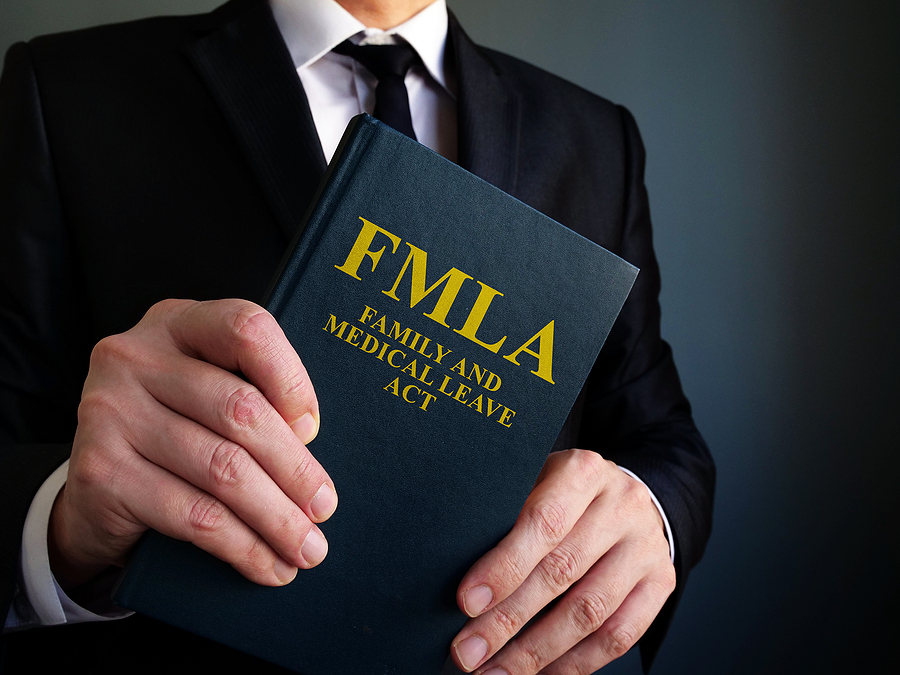
Recently in Family & Medical Leave Act (FMLA) Category

September 30, 2011

Employee Alleges New Jersey Judiciary Failed to Accommodate His Disability

In two previous articles, I discussed the case of Thomas Bowers, an Information Technology Analyst who successfully appealed his race discrimination claim and his retaliation claim against the New Jersey Judiciary. Mr. Bowers was also successful on his appeal of his claims that the judiciary forced him to resign by refusing to provide him a reasonable accommodation for his disability, in violation of the New Jersey Law Against Discrimination (LAD).

Mr. Bowers claims he experienced mental and physical distress as a result of the race discrimination, harassment, and retaliation he experienced at work. His doctor diagnosed him with Anxiety Disorder, and suggested that he take medical leave from June 6 to July 1, 2007. Mr. Bowers' doctor subsequently extended his medical several times, and ultimately indicated Mr. Bowers would be ready to return to work on October 1, 2007.

On August 30, 2007, the Judiciary warned Mr. Bowers he was about to exceed his 12 weeks of protected FMLA leave. It told him he could extend his leave of absence by using his vacation time, but that he would run out of vacation time on September 6. The Judiciary warned Mr. Bowers that if he did not return to work by September 10, it would consider him to be on "an unauthorized leave of absence," and he would be subject to discipline.

On September 4, Mr. Bowers' lawyer informed the Judiciary that Mr. Bowers would not return to work until October 1. The Judiciary responded that it expected him to return to work on September 10, and repeated that he would be subject to discipline if he did not return to work by that date. The Judiciary claimed it had "experienced significant operational hardship during his absence," and could not accommodate his disability as a result. The Judiciary subsequently fired Mr. Bowers, effective September 10, 2007, because he had failed to return to work.

The Appellate Division concluded that a jury could reasonably conclude that the Judiciary failed to provide Mr. Bowers a reasonable accommodation for his disability, in violation of the LAD. It noted that Monmouth County did not post Mr. Bowers' vacant position until October 2008, and did not fill his position until January 20, 2009. It is unclear why the Judiciary could not have accommodated Mr. Bowers' disability by placing him on an unpaid medical leave through the end of September, and allowing him to return to work on October 1. If it had done so, his position would have been vacant for only 3 weeks, instead of remaining vacant until January 20. The Court noted that although the Judiciary claims budgetary constraints prevented it from replacing Mr. Bowers' sooner, a jury might reach a different conclusion. Accordingly, it found that the evidence could support a claim of failure to accommodate a disability in violation of the LAD.

Continue reading "Employee Alleges New Jersey Judiciary Failed to Accommodate His Disability" »

June 22, 2011

New Jersey Employees Can Enforce Employer's Promise of Reinstatement After Maternity Leave

In an important employment law decision, on June 8, 2011, New Jersey's Appellate Division ruled that an employee can enforce her employer's promise that she would have a job when she returned from her maternity leave. The Court reached that conclusion even though the company, Telcordia Technologies, Inc., included a clear disclaimer in both its Code of Business Ethics and the employee's job application which stated that she is an employee-at-will who can be fired "at any time, with or without grounds, just cause or reason and without giving prior notice."

In Lapidoth v. Telcordia Technologies, Inc., employee Sara Lapidoth asked her employer for a six-month maternity leave from her position as a manager on a product called ARIS, for the birth of her tenth child. The letter Telcordia sent her granting her leave also guaranteed that the company would reinstate her to the same job or a comparable one if she returned to work within 12 months. Ms. Lapidoth later asked Telcordia to extend her leave by 6 months, for a total of a one-year maternity leave. Telcordia granted her request through another letter that promised to reinstate her at the end of her leave.

Pregnancy Discrimination.jpgHowever, before Ms. Lapidoth was ready to return from her maternity leave, Telcordia decided to eliminate one of its two ARIS manager positions. The company decided to lay off Ms. Lapidoth because the only other ARIS manager had slightly better performance ratings. Since the company did not have any appropriate job openings, it fired Ms. Lapidoth.

The Appellate Division ruled that Ms. Lapidoth's maternity leave was not protected by the Family and Medical Leave Act (FMLA) or the New Jersey Family Leave Act (NJFLA) because she took off more than 12 weeks. Both the FMLA and the NJFLA require employers to give qualified employees up to 12 weeks off for the birth of a child.

However, the Court ruled that the letters Telcordia sent to Ms. Lapidoth could be enforceable employment contracts that guaranteed her a job when she was ready to return from her maternity leave. It found that, even though the company's Code of Business Ethics and Ms. Lapidoth's employment application said she was an employee-at-will, and indicated that nothing else could create any contractual rights between her and the company, the letters granting her maternity leave seemed to contradict those statements. The Court also stated that, although the letters said the company did not have to reinstate Ms. Lapidoth if it had to eliminate her job, that was not necessarily a defense because the company decided it had to eliminate one of two ARIS manager positions, but not necessarily Ms. Lapidoth's position. The Court also noted that Telcordia reinstated Ms. Lapidoth after each of her nine previous maternity leaves. Based on the circumstances, the Appellate Division concluded that a jury could find the letters guaranteeing Ms. Ladipodth a job at the end of her maternity leave created an enforceable employment contract.

Continue reading "New Jersey Employees Can Enforce Employer's Promise of Reinstatement After Maternity Leave" »

May 27, 2011

New Jersey Court Rules Employers Cannot Force Employees to Take FMLA Leave

On May 5, 2011, New Jersey's Appellate Division ruled that employers do not have the right to force employees to complete Family Medical Leave Act (FMLA) medical certifications, or to require employees to take FMLA leaves. The FMLA is a federal law that permits qualified employees to take up to 12 weeks off per year for (1) their own serious health condition, (2) the serious health condition of their spouse, son, daughter, or parent, (3) their own pregnancy, or (4) the adoption, or placement of a child in foster care.

The case, In the Matter of Township of Parsippany-Troy Hills, involves an employee who wanted to use paid sick leave instead of taking an unpaid FMLA leave when he took a family leave to care for a sick relative. His employer, the Township of Parsippany-Troy Hills, asked him to submit a FMLA certification form from his health care provider, and threatened to suspend him after he refused to submit the form.

The Appellate Division concluded that the FMLA does not permit an employer to force an employee to submit an FMLA medical certification, and therefore it is improper for an employer to discipline an employee because he refuses to submit one. Furthermore, if the employee is entitled to take the same time off under another employment policy or a union collective bargaining agreement, then the employer must grant the employee but the employee will not be protected by the FMLA.

The Appellate Division also ruled that if an employee refuses to provide enough information for the employer to determine whether his leave qualifies under the FMLA, then the company can deny the employee's request for an FMLA leave on that basis. That is because the employer does not have enough information to determine whether the leave qualifies under the FMLA due to the employee's refusal to provide enough information. So, for example, if the employer asks the employee to submit an FMLA medical certification, and the employee refuses to do so, then the employer can deny the employee's request for an FMLA leave.

In reaching those conclusions, the Appellate Division explained that companies covered by the FMLA must give employees four different forms of notice about their rights under the FMLA:

  1. General Notice: Employers must post general notice of the FMLA's provisions and the procedures for filing a complaint for a violation of the FMLA in a conspicuous location, and include it in any employee handbooks or other written policies provided to employees;

  2. Eligibility Notice: When the employer becomes aware that an employee's time off might qualify under the FMLA, the employer must tell the employee whether he is eligible to take an FMLA leave based on his length of employment and the size of the company;

  3. Rights and Responsibilities Notice: When an employee requests an FMLA-qualifying leave, or the employer has enough information to know the employee's leave might qualify under the FMLA, the employer must tell the employee about his rights and responsibilities under the FMLA, and the potential consequence if he fails to meet those obligations; and

  4. Designation Notice: Once an employer has enough information to determine whether an employee's requested leave qualifies under the FMLA, it must inform him whether it qualifies.
If you work in New Jersey or New York, and your employer has not provided you the required notice under the FMLA, or violated another one of your rights under the FMLA, then you should contact an experienced employment lawyer.

August 2, 2010

Department of Labor Says FMLA Covers Non-Traditional Parents

Among other things, the Family & Medical Leave Act (FMLA) allows covered employees to take off up to 12 weeks from work per year to care a newborn, newly adopted or placed child, or to care for a son or daughter with a serious health condition. However, the FMLA does not indicate whether someone who provides care for a child, but is not the child's biological or legal parent. Among other situations, this arises in same sex marriage and civil union in which only one person is the child's legal parent or guardian.

To answer this question, on June 22, 2010 the United States Department of Labor (DOL)'s Deputy Administrator issued a formal interpretation of the term "son or daughter" under the FMLA. The DOL indicated that someone is an employee's son or daughter if they provide either financial support or day-to-day care for the child.

The DOL reached this conclusion because the FMLA defines "parent" to include someone who acts "in Loco parentis." Someone acts in Loco parentis if they fill the normal obligations of a parent, but are not the child's biological or adoptive parent. Someone who acts in Loco parentis is entitled to take an FMLA to take care of the child.

The DOL provided an example that an individual who provides day-to-day care for his or her partner's child could be considered the child's parent under the FMLA, even if he or she has no legal or biological relationship to the child. It also indicates that this can be true irrespective of whether the child has a biological parent in their home, or already has both a mother and a father.

Continue reading "Department of Labor Says FMLA Covers Non-Traditional Parents" »

December 22, 2009

Extended Medical Leave Can Be Reasonable Accommodation Under New York Law

New York's Appellate Division recently recognized that a disabled employee working in New York may be entitled to take extended medical leave under the New York State and New York City Human Rights Law.

The case involved Deborah Phillips, a civil service employee for New York City's Department of Homeless Services (DHS). After Ms. Phillips had worked for DHS for 18 years, she took a 3 month medical leave for a serious medical condition, stage III breast cancer. Ms. Phillips asked her employer to extend her medical leave for a full year. DHS denied her request because she had exceeded her entitlement to 12 weeks of leave under the Family and Medical Leave Act (FMLA), and was ineligible for additional unpaid medical leave under the Department's policy. DHS told her that if she did not return to work by October 30, 2006, the date on which she originally agreed to return to work, she would be subject to disciplinary action, or fired.

Ms. Phillips then asked DHS if she could take any additional medical leave. The City denied her request, again telling her that if she did not to return to work by October 30, she would be fired and would lose her medical benefits. Ms. Phillips did not return to work, and DHS eventually fired her.

Ms. Phillips sued, claiming New York City denied her reasonable accommodations for her disability and fired her because of her disability, in violation of the New York State Human Rights Law and the New York City Human Rights Law. She sought to be reinstated to her job with DHS, damages for her lost salary and benefits, and punitive damages.

The trial court dismissed Ms. Phillips' case, ruling that her cancer was not a "disability" under either the New York State or New York City Human Rights Law, but even if she was disabled she could not prove her claim because she admitted she could not perform the essential functions of her job, even with a reasonable accommodation. In particular, the court found Ms. Phillips had asked DHS to hold her job open "indefinitely," which was not a reasonable accommodation under either the New York State or the NYC Human Rights Law.

But New York's Appellate Division disagreed. On July 28, 2009, it reversed the trial court's decision dismissing Ms. Phillips' case, finding she had set forth valid claims of disability discrimination and failure to accommodate disability under New York State's and New York City's anti-discrimination laws.

Under the New York State Human Rights Law, a reasonable accommodation is an action that allows an employee to perform the essential functions of her job. Reasonable accommodations can include providing an accessible work site, acquiring or modifying equipment, providing support services for a person with impaired hearing or vision, restructuring a job, or providing a modified work schedule, as long as doing so would not impose an undue hardship on the business.

The appellate court found it was improper for DHS to deny Ms. Phillips' request for an extended medical leave based on its policy, without engaging in an individualized "interactive process." Specifically, DHS should have talked to Ms. Phillips to clarify her needs, and to consider its own business needs, in an effort to find an appropriate reasonable accommodation.

The Appellate Division ruled that, under both the State and City Human Rights Law, a company's failure to engage in the interactive process, by itself, is a violation of law. This is different from the federal anti-disability discrimination law, the Americans with Disabilities Act (ADA), and many state laws, including the New Jersey Law Against Discrimination (LAD). Under the ADA and the LAD, in order to prove a claim based on their employer failing to engage in the interactive process, employees must identify a reasonable accommodation that would have permitted her to perform the essential functions of her job.

New York's Appellate Division also disagreed with the lower court's conclusion that Ms. Phillips had requested an "open-ended" medical leave, since she later asked for any additional medical leave. But it ruled that if Ms. Phillips had needed a one-year extension to her leave, DHS might have been required to grant her that much time off to recover from surgery for her breast cancer. It noted that, in many circumstances, a request for a one-year medical leave would not be reasonable. However, it refused to conclude that a request for one year off for a disability can never be a reasonable accommodation. Rather, the determination whether an accommodation is "reasonable" must be made on an individual case-by-case basis to decide whether the accommodation will be effective, and whether it would cause an undue hardship to the employer.

The Court interpreted the right to accommodations for disabilities under the New York City law even more broadly. It indicated that the New York City Human Rights Law requires employers to provide employees accommodations, rather than reasonable accommodations. As a result, the Court concluded that under New York City law employers must provide accommodations to disabled employees even if the accommodation will not allow the employee to perform the essential functions of their jobs. Rather, employers must provide any accommodation unless the employer can prove the accommodation it would cause it an undue hardship.

Accordingly, the Appellate Division sent Ms. Phillips' case back to the trial court to give her an opportunity to prove her disability discrimination and failure to accommodate claims.

November 1, 2009

When Do Employers Violate the ADA By Discriminating Against Employees With Disabled Relatives?

In two previous articles, I discussed important rulings the Third Circuit Court of Appeals made in Erdman v. Nationwide Insurance Company regarding the Family & Medical Leave Act (FMLA). Specifically, that case rules that an employee's time worked from home counts toward the FMLA's 1,250 hour eligibility requirement if the employer knew or should have known the employee was working off-site, and that an employee who requests an FMLA leave is legally protected even if he never actually takes a leave. But Erdman also makes an important ruling regarding another employment law, the Americans with Disabilities Act (ADA).

The ADA is a federal law that prohibits employers from discriminating against employees on the basis of a disability. It includes a provision prohibiting employers from discriminating against individuals because they have a relationship or association with someone who has a disability. For example, it prohibits employers from discriminating against an employee who has a disabled child.

As Erdman notes, although the ADA requires employers to make reasonable accommodations to allow employees to perform the essential functions of their jobs, it does not require employers to accommodate employees who have a disabled relative. As a result, employers can refuse to provide an employee time off to care for a disabled relative without violating the ADA. Of course, doing so could violate the FMLA or a state law such as the New Jersey Family Leave Act.

However, the Third Circuit's decision recognizes that an employer would violate the ADA if it makes an employment decision because an employee has a disabled relative, rather than because the employee needs to take time off from work. As a result, an employee whose employer denies him the right to take time off for a disabled relative can establish a claim under the ADA if he can prove that his employer would not have fired him if he had requested the same time off for another reason.

The Court further recognizes that it is unlawful for an employer to fire an employee based on the belief that the employee might miss work to care for disabled relative at some point in the future. Erdman explains that such a decision would be based on "unfounded stereotypes or assumptions about the need to care for a disabled person." It is therefore a form of prohibited associational disability discrimination.

The decision notes other circumstances in which an employer would violate the ADA based on an unlawful assumption about an employee's disabled relative. For example, an employer would violate the ADA if it fires or otherwise discriminates against an employee (1) because of its assumptions regarding the relative's health care costs to the company; (2) because of its fear that the employee will contract or spread a relative's disease; or (3) because the employee is somewhat distracted by his relative's disability, but not so distracted that he cannot satisfactorily perform his job.

October 21, 2009

Employees Who Request FMLA Leave Are Legally Protected Before They Take Any Leave

Last week, I discussed the Third Circuit's recent decision regarding when time worked from home counts toward the Family & Medical Leave Act (FMLA)'s 1,250 hour eligibility requirement. The same case, Erdman v. Nationwide Insurance Company, also addresses whether an employee who requests but does not receive an FMLA leave is protected by the FMLA.

The FMLA has two separate provisions, one that prohibits employers from interfering with an employee's FMLA rights, and another that prohibits employers from retaliating against employees. The FMLA's interference with rights provisions prohibit employers from (1) interfering with, restraining, or denying the exercise of or attempt to exercise, any right provided by the FMLA; and (2) discharging or in any other manner discriminating against any individual for opposing any practice made unlawful by the FMLA. In contrast, to establish a retaliation claim under the FMLA, an employee must prove that (1) he is protected under the FMLA; (2) he suffered an adverse employment action, such as being fired, demoted, or suspended, and (3) the adverse employment action was caused by the employee's exercise of his FMLA rights.

The Third Circuit noted that "it would be patently absurd if an employer who wished to punish an employee for taking FMLA leave could avoid liability simply by firing the employee before the leave begins." In other words, the Court has no doubt that employees are protected by the FMLA when they request FMLA leaves, even if they never actually take an FMLA leave. The court concluded that, depending on the circumstances, firing an employee for making a valid request for FMLA leave can constitute either an interference with the employee's FLMA rights, unlawful retaliation, or both.

This interpretation of the FMLA is important because it protects employees who suffer adverse consequences because they requested FMLA leave, even if those consequences occur before their leave begins. It also appears to protect some employees who request an FMLA leave, mistakenly believing they are entitled to one, such as employees who fall just short of the 1,250 hour eligibility requirement, or who do not meet the FMLA's definition of a serious health condition. Hopefully, future cases will clarify just how far the Court will extend this rule.

October 14, 2009

Time Worked From Home Counts Toward FMLA's Minimum Hour Eligibility Requirement If Employer Knew or Had Reason to Know Employee Worked From Home

On September 23, 2009, in Erdman v. Nationwide Insurance Company, the United States Court of Appeals for the Third Circuit discussed when an employee's time working from home counts toward the 1,250 minimum hours required for an employee to be covered by the Family & Medical Leave Act (FMLA). The Third Circuit is the federal appellate court that includes New Jersey. The FMLA is a federal employment law that permits qualified employees to take time off from work to care for their own serious medical conditions, the serious medical conditions of members of their immediate family, for pregnancy, childbirth, adoption, or foster care, or to care for a new child.

The employee in that case, Brenda Erdman, has a daughter with Downs Syndrome. In 1998, Ms. Erdman's employer, Nationwide Insurance Company, permitted her to work part time so she could care for her daughter. Ms. Erdman worked part time for four years, when she switched to a four day work week.

Ms. Erdman worked nearly 1,300 hours for Nationwide Insurance during the year at issue, including more than 100 hours that she worked from home. She had previously worked from home for Nationwide for many years. Nationwide consistently either paid her for working those hours, or allowed her to use the time as "comp" time.

In 2002, Ms. Erdman's supervisor instructed her to "put in the hours that . . . you're supposed to put in and nothing more than that." Although Ms. Erdman asked if she was still permitted to work extra hours to accrue comp time, her supervisor did not respond.

The lower court concluded that Nationwide did not have sufficient notice that Ms. Erdman continued to work from home after her supervisor told her she could only put in the hours she was supposed to work. As a result, it dismissed her case. However, the Third Circuit disagreed.

The Third Circuit recognized that hours worked off-site can count toward the FMLA's minimum hour requirement only if the employer "knows or has reason to believe" the employee is working those hours. As a result, the relevant question is whether a jury reasonably can conclude that Nationwide knew or should have know that Ms. Erdman continued to work from home after her supervisor's instruction.

The Third Circuit ruled that a jury can conclude that Nationwide had sufficient notice that Ms. Erdman was continuing to work from home. Specifically, a jury can believe her supervisor's statement merely meant that she could no longer be paid for working extra hours at home, without prohibiting her from continuing to work from home to accrue comp time. In other words, her supervisor's comment could mean the company wanted to eliminate overtime pay, or wanted to ensure uniform salaries, without prohibiting Ms. Erdman from working at home to make up for time she missed. Accordingly, the Court reinstated Ms. Erdman's case and sent it back to the District Court so it can proceed to a trial.

December 16, 2008

Frequently Asked Questions Regarding the New Jersey Family Leave Insurance Law

Earlier this year, New Jersey became the third state in the country to pass a law entitling employees to be paid during family leaves. New Jersey's Family Leave Insurance law is set to go into effect in just a few weeks. Since the law is brand new, many employees and employers do not fully understand what the law means or what it requires. This article will answer many of the most frequently asked questions about the New Jersey Family Leave Insurance law.

Q. When Does the Family Leave Insurance Law Go Into Effect?

A. On January 1, 2009, New Jersey companies will begin withholding taxes from employee salaries to fund family leave insurance benefits. Starting on July 1, 2009, qualified employees will be entitled to receive state insurance benefits during covered family leaves.

Q. Who is Qualified to Receive Family Leave Insurance Benefits?

A. The New Jersey Family Leave Insurance law applies to all employees who are covered by the New Jersey Unemployment Compensation law. To be qualified for benefits, an employee needs to have worked for at least 20 calendar weeks in New Jersey and either earned at least $143 per week or a total of $7,200 during the 12 months immediately before he or she made a claim for family leave insurance benefits.

Q. For How Many Weeks Can an Employee Receive Family Leave Insurance Benefits?

A. An employee can receive up to six weeks of family leave insurance benefits during a 12 month period. The 12 month period begins on the first day after the employee's initial claim for family leave insurance benefits.

Q. How Much Money Will I Receive If I Qualify For Family Leave Insurance Benefits?

A. An employee's weekly benefits are normally two-thirds of the employee's average weekly income over the eight weeks before the family leave, up to a maximum of $546 per week.

Q. How Much is Family Leave Insurance Going to Cost Me?

A. The cost of Family Leave Insurance is minimal, especially when compared to other taxes. The total withholding for each employee is less than a tenth of a percent of their wages. There is also a maximum annual contribution per person, which will be $26.01 in 2009.

Q. What Types of Leaves Qualify for Family Leave Insurance Benefits?

A. Leaves to bond with a child and leaves to care for a family member with a serious health condition.

Q. What Types of Leaves to Bond With a Child Are Covered by the Paid Family Leave Act?

A. A qualified employee can receive family leave insurance benefits during a leave to bond with a child during the first 12 months after a child is born if the employee is the child's biological parent or the domestic partner or civil union partner of the child's biological parent. Likewise, a qualified employee who adopts a child can use his or her six weeks of family leave insurance benefits to bond with a child during the first 12 months after the adoption.

An employee can use family leave insurance benefits during an intermittent leave to bond with a newborn or newly adopted child, but to qualify for benefits the employee must take the leave in periods of at least seven days at a time, and the employer must agree to the employee's intermittent leave schedule.

Q. What Kinds of Leaves to Care for Family Members with Serious Health Conditions Are Covered by the Paid Family Leave Act?

A. A qualified employee is entitled to use family leave insurance benefits during a leave to care for his or her immediate family member, meaning a parent, child, spouse, domestic partner, or civil union partner who has a serious health condition. Those benefits can be used for six consecutive weeks, six intermittent weeks, or for 42 intermittent days during the 12 months after the claim.

Q. What Notice Must I Give Before I Can Receive Family Leave Insurance Benefits?

A. An employee who plans to seek family leave insurance benefits must give his or her employer reasonable advanced notice of the leave. Exactly how much notice is required varies based on the circumstances. For example, an employee who intends to seek benefits during an intermittent family leave must give a minimum of 15 days notice before the leave, and an employee who plans to seek benefits during a leave to bond with a newborn or newly adopted child must give his or her employer thirty days notice before the leave.

Q. Does the Family Leave Insurance Law Entitle Me to Take a Family Leave

A. No. The New Jersey Family Leave Insurance law only provides monetary benefits. It does not entitle employees to take family leaves. However, many employees are already legally entitled to those rights under the New Jersey Family Leave Act (NJFLA) or the Family and Medical Leave Act (FMLA).

Q. Does the Family Leave Insurance Law Entitle Employees to Return to Their Job?

A. No. However, some employees are guaranteed to be returned to their job or an equivalent one under the New Jersey Family Leave Act (NJFLA) or the Family and Medical Leave Act (FMLA).

Q. Are There Any Other Limits on an Employee's Right to Receive Family Leave Insurance Benefits?

A. Yes. There are many other limits to an employee's rights to receive family leave insurance benefits. For example, employees ordinarily do not receive family leave insurance benefits during the first seven days of a family leave. In addition, among other limitations, an employee cannot receive family leave insurance benefits:

  • While receiving disability benefits or paid sick leave;
  • While the employee is receiving unemployment insurance benefits;
  • While the employee is receiving full salary or paid time off;
  • When the employee is working;
  • During the first 14 days after the employee's last day of work, unless the family leave started while the employee was still employed.
  • While the family member for whom the employee is caring is not under the care or supervision of a health care provider;
  • While the employee is out of work due to a labor work stoppage, such as a union strike; or
  • After the employee is fired for gross misconduct related to a crime under New Jersey law.
Q. Can an Employer Require An Employee to Use Vacation or Sick Time Before Receiving Family Leave Insurance Benefits?

A. Yes. Employers can require employees to use up to two weeks of paid sick leave, vacation time, or other paid leave time toward their annual family leave insurance benefits entitlement.

The employment lawyers at Resnick Nirenberg & Cash are dedicated to enforcing the employment law and civil rights of employees in New York and New Jersey.

September 1, 2008

Employee Rights Laws Part 3: Overview of New Jersey Employment Law Statutes

Employee Rights Laws Part 3: Overview of New Jersey Employment Law Statutes

Part 1 - Overview of Federal Anti-Discrimination Employment Laws
Part 2 - Overview of Other Federal “Wrongful Termination” Employment Laws

In most states, unless you have a written employment contract, are a member of a labor union, or are a civil service employee, you are probably an employee at will. Employment at will is the general principal that your company can fire you for any reason, or even for no reason at all. It also means you can quit your job for any reason.

Fortunately, federal, state, and local laws create many exceptions to employment at will that give employees significant protection from an unfair or arbitrary termination. This, the third part of a four part series, discusses some of the most important exceptions to employment at will under New Jersey. The first part of the series discusses some of the most important federal anti-discrimination laws. The second part describes many other important federal “wrongful termination” laws. Part four reviews employee rights under New York State and New York City law (scheduled to be published on September 6, 2008).

New Jersey Employment Law Statutes

The following is an overview of some of New Jersey’s most important employment law statutes. This is not intended to be a comprehensive list of all New Jersey employment laws. It is also important to understand that not every one of these laws applies to every employee working in New Jersey. If you believe your employment law rights have been violated, it is recommended that you contact a knowledgeable, dedicated and experienced New Jersey employment lawyer.

Conscientious Employee Protection Act (CEPA)

  • Prohibits a broad range of “whistleblower” activities, such as making it unlawful to fire an employee because the employee objected to or refused to participate in something he or she reasonably believes is fraudulent, criminal, violates the law, or is incompatible with a clear mandate of public policy concerning the public health, safety or welfare or protection of the environment.
Millville Dallas Airmotive Plant Job Loss Notification Act (New Jersey WARN Act)
  • Requires most companies with an establishment in New Jersey with 100 or more employees to provide at least 60 days advance notice of a plant closing, mass layoff, or relocation of operations.
New Jersey Civil Rights Act (CRA)
  • Provides a remedy if a person acting under color of law deprives or threatens to deprive an individual of a civil right guaranteed by the United States Constitution, the New Jersey Constitution, or any federal or New Jersey law.

  • Prohibits individuals acting on behalf of the State of New Jersey from discriminating against individuals on the basis of race, gender, age, national origin, disability, sexual orientation, and other legally protected categories.
New Jersey Family Leave Act (FLA)
  • Entitles covered employees to take up to 12 weeks off from work every 24 months, as a family leave for the birth or adoption of a child, or the serious illness of your child, spouse or parent, including parent-in-laws and stepparents.

  • Protects employees who take a protected family leave, by entitling them to return to their jobs, or an equivalent one, at the end of the family leave.

  • Prohibits employers from retaliating against employees who took family leaves under the New Jersey Family Leave Act.
New Jersey Law Against Discrimination (LAD)
  • Makes it illegal for employers to discriminate against employees because of their race, age, sex (gender), pregnancy, mental disability, physical disability, color, national origin, nationality, marital status, domestic partnership status, affectional or sexual orientation, atypical hereditary cellular or blood trait, genetic information, military service, creed, or religion.

  • Prohibits employers from harassing employees because of their race, age, sex (gender), pregnancy, mental disability, physical disability, color, national origin, nationality, marital status, domestic partnership status, affectional or sexual orientation, atypical hereditary cellular or blood trait, genetic information, military service, creed, or religion. This includes prohibiting sexual harassment.

  • Requires employers to provide reasonable accommodations to enable employees with physical disabilities or mental disabilities to perform the essential functions of their jobs.

  • Protects individuals who make complaints of violations of the LAD or who engage in other activities protected by the LAD.
New Jersey Wage & Hour Act
  • Requires companies to pay most non-exempt employees working in New Jersey overtime of time and a half, for each hour the after 40 hours in a week.

  • Establishes a higher minimum wage than the minimum required by the Fair Labor Standards Act. As of October 1, 2006, most employees working in New Jersey are entitled to receive a minimum of $7.15 per hour.
New Jersey Worker’s Compensation Act
  • Prohibits employers from retaliating against employees who file claims under New Jersey’s Worker’s Compensation Act.
Wrongful Discharge in Violation of Public Policy
  • Protects employees, and in particular whistleblowers, from being wrongfully fired in violation of a clear mandate of New Jersey’s public policy.
  • The attorneys of the employment and civil rights law firm of Resnick Nirenberg & Cash, P.C., are experienced at representing employees in New Jersey whose employment law rights have been violated.

    If you are interested in receiving future articles from the New York & New Jersey Employment Law Blog, please subscribe to our free e-Newsletter.

August 24, 2008

Employee Rights Laws Part 2: Overview of Other Federal "Wrongful Termination" Employment Laws

Employee Rights Laws Part 2: Overview of Other Federal “Wrongful Termination” Employment Laws

In most states, including New York and New Jersey, unless you have a written employment contract, are a member of a labor union, or are a civil service employee, you are probably an employee at will. Employment at will is the general principal that your company can fire you for any reason, or even for no reason at all. It also means you can quit your job for any reason.

Fortunately, federal, state, and local laws create many exceptions to employment at will that give employees significant protection from an unfair or arbitrary termination. This, the second part of a four part series, discusses many other important federal “wrongful termination” laws. The first part of the series discusses some of the most important federal anti-discrimination laws. Part three addresses some of the most important exceptions to employment at will under New Jersey law. Part four reviews employee rights laws under New York State and New York City law.

Overview of Other Federal Employment Laws

The following is an overview of some of the most important federal “wrongful termination” employment statutes other than anti-discrimination laws. This is not intended to be a comprehensive list of all such laws. It is also important to understand that not every federal employment law applies to every employee. If you believe your employment law rights have been violated, it is recommended that you contact a knowledgeable, dedicated and experienced employment lawyer.

Civil Rights Act of 1881 (Section 1983)

  • Provides a remedy for an individual if someone acting on behalf of the state or local government has violated their civil rights under the United States Constitution.

  • Protects constitutional rights including the right to freedom of speech, freedom of association, freedom of religion, freedom from unreasonable search and seizure, due process of law, and equal protection of law.

  • Prohibits individuals action on behalf of a state from discriminating on the basis of race, gender, religion, and disability status, including prohibiting employment discrimination and harassment.

Consolidated Omnibus Budget Reconciliation Actof 1985 (COBRA)

  • Entitles covered employees and their families to continue health coverage for a period after certain qualifying events, such as when the employee loses his or her job. Ordinarily, the period of continued coverage is up to 18 months. Health insurance continuation coverage under COBRA is at the employee’s cost.

Employee Retirement Income Security Act of 1974 (ERISA)

  • Sets minimum standards for most private employer’s pension and health insurance plans.

  • Requires employers to provide certain information regarding the features and funding of certain pension and health insurance plans.

  • Requires a grievance and appeal process for certain employee benefit plans.

Fair Labor Standards Act of 1938 (FLSA)

  • Requires companies to pay most non-exempt employees time and a half for each overtime hour, meaning more than 40 hours worked in a week.

  • Sets a minimum wage for most jobs. As of July 24, 2008, the federal minimum wage is $6.55 per hour. The federal minimum wage will increase to $7.25 per hour on July 24, 2009. Many states, including both New York and New Jersey, have established minimum wages that are higher than the minimum required by the FLSA.

Family and Medical Leave Act of 1993 (FMLA)

  • Entitles qualified employees to take up to a total of 12 weeks off per 12 month period for:

    1. his or her own serious health condition,

    2. the serious health condition of a member of the employee’s immediate family (meaning a spouse, child or parent),

    3. the birth of the employee’s client, or the placement of a child through adoption or foster care, or

    4. caring for a child who is less than one year old.
  • Protects employees who take FMLA leaves, by entitling them to return their jobs, or an equivalent position, at the end of their leaves.

  • Makes it illegal for an employer to retaliate against an employee who took an FMLA leave, or to otherwise interfere with an employee’s rights under the FMLA.

Health Insurance Portability and Accountability Act of 1996 (HIPAA)

  • Provides protection for employees who have preexisting medical conditions.

  • Prohibits employers from discriminating against employees and other covered dependents based on their health status.

Sarbanes-Oxley Act of 2002

  • Prohibits brokers and dealers involved in investment banking from retaliating against securities analyst employees whose research reports make adverse, negative, or unfavorable conclusions about the company.

  • Provides whistleblower protection to employees of publically traded companies by prohibiting retaliation, discrimination and harassment against:
    1. Employees who assist with certain investigations into violations of the Sarbanes-Oxley Act, Securities and Exchange Commission (SEC) rules and regulations, or other federal laws relating to fraud against shareholder; and

    2. Employees who file, testify, or otherwise participate in a proceeding alleging a violation of the Sarbanes-Oxley Act, SEC rules and regulations, or other federal laws relating to fraud against shareholders.

The employment lawyers at the law firm of Resnick Nirenberg & Cash, P.C., are experienced at representing employees in New York and New Jersey whose federal employment law rights have been violated.

If you are interested in receiving future articles from the New York & New Jersey Employment Law Blog, please subscribe to our free e-Newsletter.